


CoinDCX US Futures is designed for Indian retail traders who want exposure to US assets or crypto derivatives without leaving the crypto ecosystem. It prioritizes accessibility, leverage, and ease. Interactive Brokers, on the other hand, is a global brokerage powerhouse, built for serious traders who want access to regulated futures markets with professional tools, lower risk structures, and institutional-level execution. This ultimately defines the core distinction in the CoinDCX US Futures vs. Interactive Brokers comparison.
CoinDCX US Futures vs. Interactive Brokers: Overview
| Parameter | CoinDCX US Futures | Interactive Brokers Futures |
|---|---|---|
| Asset Type | Crypto derivatives + synthetic US exposure | Real futures (equity, commodities, crypto via CME, FX, bonds) |
| Regulation | Crypto exchange (India-focused, less strict globally) | Highly regulated (SEC, FINRA, global regulators) |
| Leverage | Up to 100x | Typically low (5x–20x) depending on contract |
| Ownership | No real asset ownership (derivatives only) | Real exchange-traded futures contracts |
| Market Access | Limited (selected pairs/assets) | Global markets (US, Europe, Asia exchanges) |
| Trading Hours | 24/7 (crypto style) | Market hours (exchange-based, not 24/7) |
| Fees | Low maker-taker (~0.02–0.07%) + GST | ~$0.25–$0.85 per contract |
| Liquidity | Good but exchange-dependent | Extremely high (institutional liquidity) |
| Risk Level | Very high (due to leverage) | Moderate (controlled margin systems) |
| User Type | Retail / crypto traders | Professionals / serious traders |
| Taxation (India) | Often treated as business income (varies) | Foreign asset taxation + compliance |
| Custody & Safety | No SIPC-like protection | Strong investor protection frameworks |
CoinDCX US Futures
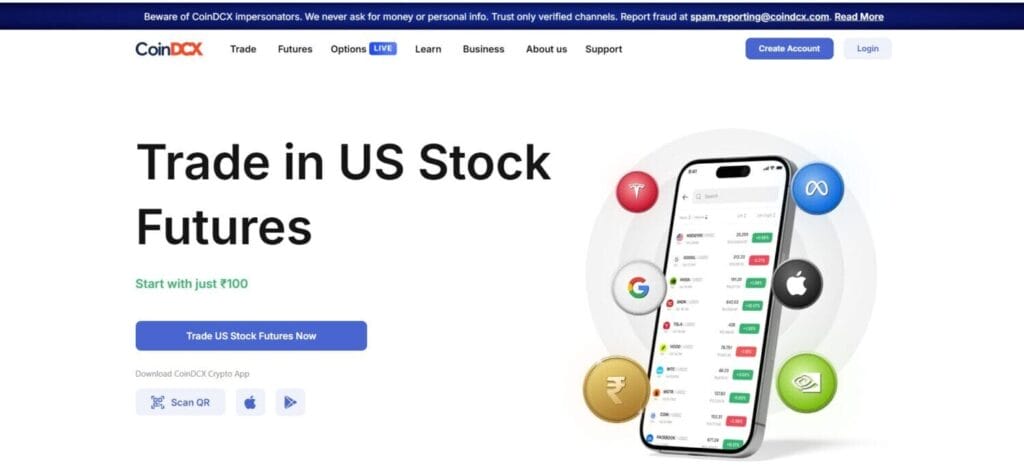
CoinDCX US Futures gives Indian traders exposure to US stocks and indices by allowing them to trade price movements via INR-settled futures, without owning the underlying assets. It removes the friction of USD conversion, setting up foreign brokerage accounts, and dealing with LRS compliance, making global market access much more straightforward.
The platform is clearly built for active traders, packing in features such as leverage, short selling, perpetual contracts, and near-round-the-clock market access. In essence, it’s not about long-term investing. It’s a fast-paced trading environment focused on flexibility, rapid execution, and the capture of short-term market opportunities.
Also, you may read CoinDCX US Futures vs Groww 2026
CoinDCX US Futures: Key Features
- INR-Based US Stock Futures: Trade US equities and indices directly in INR without needing currency conversion or international fund transfers.
- High Leverage (Up to 20x–25x): Enhance your market exposure with leveraged positions, allowing more capital-efficient strategies.
- Bi-Directional Trading (Long & Short): Take advantage of both upward and downward market movements, unlike traditional buy-only investing.
- Round-the-Clock Trading: Access markets anytime, including weekends and beyond standard US trading hours.
- No LRS or Forex Hassles: Avoid the complexities of overseas remittance and currency exchange processes.
- Quick INR Funding: Deposit funds instantly using IMPS or NEFT with minimal waiting time.
- Low Capital Requirement: Begin trading with a minimal investment starting at ₹100.
- Perpetual Futures Structure: Trade contracts without expiration, maintaining continuous market exposure.
- Global Market Access: Gain exposure to top US stocks like Apple, Tesla, Google, along with major indices such as the Nasdaq.
- Event-Driven Trading Opportunities: React instantly to earnings releases, macroeconomic shifts, and global developments.
Also, you may read CoinDCX US Futures vs Winvesta
CoinDCX US Futures: Fees
- Trading Fees: Charged between 0.007% (maker) and 0.05% (taker) of the total trade value, keeping transaction costs relatively low.
- Funding Charges: Approximately 4%–8% annually, applied every 8 hours on open positions.
- Deposits & Withdrawals: INR transfers via IMPS are free, with zero fees for both funding and withdrawals.
Also, you may read Coinbase vs CoinDCX – Full Comparison
CoinDCX US Futures: Execution and Security
- Long & Short Flexibility: Capture gains in both upward and downward markets by taking bullish (long) or bearish (short) positions.
- Advanced Trading Terminal: Utilize a cockpit-style web interface with professional-grade charting, live P&L tracking, and integrated risk metrics.
- Built-in Risk Controls: Manage trades effectively with auto-liquidation safeguards and customizable Take Profit (TP) and Stop Loss (SL) orders.
Also, you may read CoinDCX US Futures vs INDmoney Full Comparison
Interactive Brokers
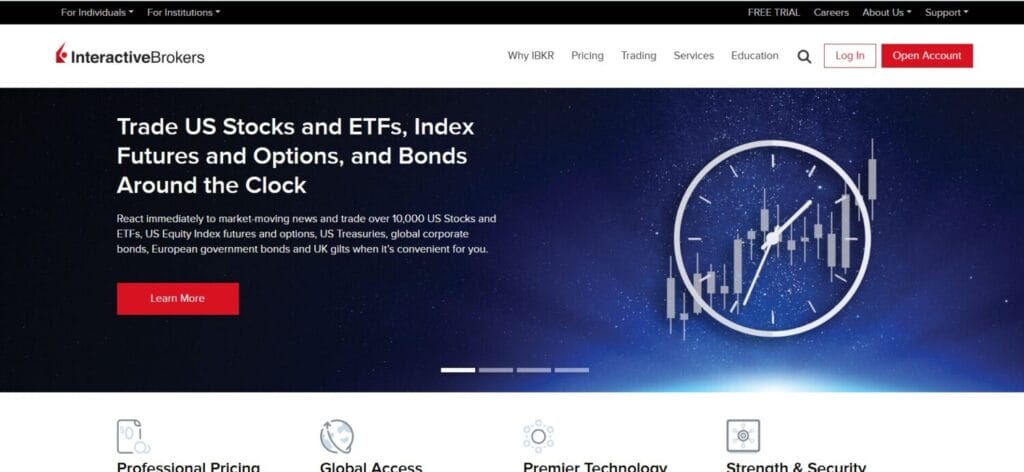
Interactive Brokers provides access to standard exchange-traded futures (like CME Bitcoin or E-mini S&P 500) and US stock trading. For Indian residents, IBKR limits global trading primarily to cash-based products (stocks, ETFs) due to LRS regulations, while domestic futures are available via IBKR India. While highly reliable and feature-rich, it is best suited for experienced traders due to its complexity and USD funding requirements.

Also, you may read 10 Best Forex Brokers
Interactive Brokers: Key Features
- Global Market Access: Trade across 150+ markets in stocks, futures, options, forex, bonds, and ETFs from a single account.
- Low-Cost Trading: Competitive commissions with transparent pricing and no hidden spreads.
- Advanced Trading Platforms: Access Trader Workstation (TWS), web platform, and mobile app with professional-grade charting and analytics.
- Institutional-Grade Execution: Smart order routing helps achieve efficient price execution with low latency.
- Wide Asset Coverage: Supports multi-asset trading including equities, derivatives, commodities, and currencies.
- Sophisticated Order Types: Includes bracket orders, algorithmic trading tools, and conditional orders.
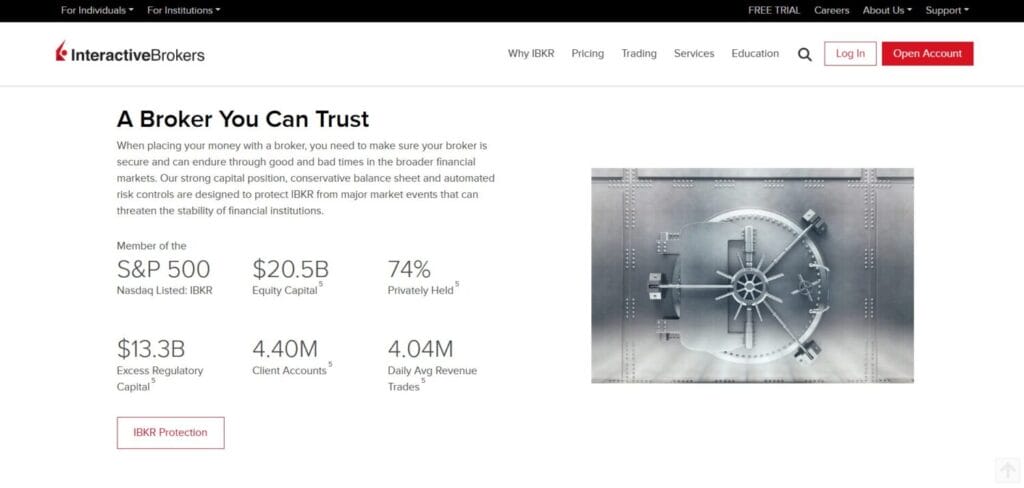
- Strong Regulation and Security: Operates under top-tier regulators with investor protection and segregated accounts.
- Multi-Currency Support: Hold and trade in multiple currencies with competitive forex conversion.
- Research and Analytics Tools: Integrated research, market data, risk analysis, and portfolio tracking.
- API and Automation Support: Enables algorithmic trading and system integration via APIs.
Interactive Brokers: Fees
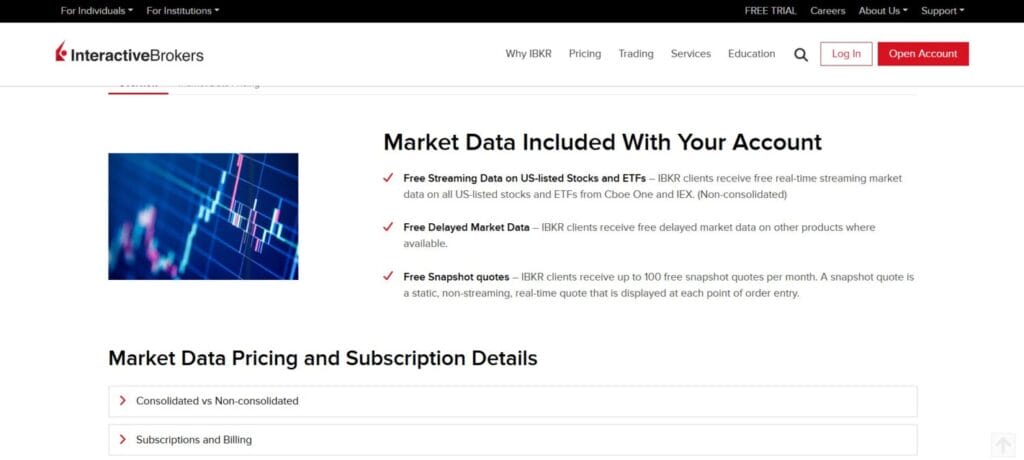
- IBKR: Commissions range from $0.25 to $0.85 per contract for standard futures, though crypto futures (like CME BTC) can cost up to $5.00 per contract.
- IBKR: No funding rates for standard futures; costs are built into the “roll” between contract months or overnight margin interest.
- Options Trading Fees: Charged per contract, generally starting from around $0.65 per contract, with discounts for higher volumes.
- Withdrawal Fees: One free withdrawal per month; additional withdrawals may incur small fees.
Also, you may read Best Alternatives to TradingView for Crypto Price Tracking
Interactive Brokers: Security Features
- Two-Factor Authentication: Requires username/password plus a second verification step via mobile app or physical security device for account access.
- Secure Login System (IB Key): Uses dynamically generated security codes, ensuring access is impossible without the registered device.
- Advanced Encryption (SSL/TLS): Implements 2048-bit certificates and TLS encryption to secure all data transmission.
- IP Access Restrictions: Allows users to restrict login access to specific IP addresses for additional control.
- Automatic Logout & Login Protection: Auto logoff after inactivity and account lock after multiple failed login attempts.
- Real-Time Security Monitoring: Dedicated systems and teams monitor transactions and flag suspicious activity instantly.
- Segregation of Client Funds: Client funds are held separately from company funds and calculated daily for protection.
- Investor Protection (SIPC Insurance): Protection up to $500,000 (including $250,000 cash), with additional excess insurance coverage.
- Business Continuity & Disaster Recovery Plan: Systems designed to restore access to funds and accounts quickly during disruptions.
Also, you may read 10 Best Stock Trading Prop Firms: FTMO, Topstep, Apex, FundedNext
What makes CoinDCX US Futures Different from Interactive Brokers
Product Nature
- CoinDCX US Futures: Synthetic, crypto-style futures tracking US stocks and indices, not traded on actual exchanges.
- Interactive Brokers: Direct access to real exchange-listed futures contracts with clearinghouse backing.
Market Access
- CoinDCX US Futures: Limited selection (~20+ US stocks + Nasdaq index)
- Interactive Brokers: Access to global markets across thousands of instruments including commodities, bonds, and currencies.
Currency & Funding
- CoinDCX US Futures: Fully INR-based trading, no forex conversion required.
- Interactive Brokers: Requires USD funding and cross-border remittance (LRS for Indian users).
Accessibility & Entry Barrier
- CoinDCX US Futures: Very low entry barrier with minimum deposit around ₹100.
- Interactive Brokers: Higher capital requirement and more complex onboarding.
Trading Hours
- CoinDCX US Futures: 24/7 trading including weekends.
- Interactive Brokers: Operates based on exchange trading hours (not continuous).
Leverage Model
- CoinDCX US Futures: High leverage (up to ~20x), similar to crypto derivatives.
- Interactive Brokers: Exchange-defined margin, generally lower and more structured.
Ownership & Exposure
- CoinDCX US Futures: No ownership of underlying assets, purely price speculation.
- Interactive Brokers: Real exposure to exchange-traded derivatives and underlying markets.
Regulation & Safety
- CoinDCX US Futures: Registered in India but not a fully regulated brokerage (no investor protection like SIPC).
- Interactive Brokers: Highly regulated global broker with strong investor protection frameworks.
Conclusion
CoinDCX US Futures prioritizes ease and accessibility, offering INR deposits, high leverage, and 24/7 trading, but it relies on synthetic products, which carry higher risk and hidden costs such as funding fees. Interactive Brokers, in contrast, offers real exchange-traded futures with strong regulation, transparency, and safety, though it requires more effort for setup, compliance, and learning. In short, CoinDCX suits convenience-driven, high-risk trading, while Interactive Brokers is better for serious, long-term traders seeking reliability and market integrity.
Frequently Asked Questions
What is the main difference between CoinDCX US Futures and Interactive Brokers?
CoinDCX offers synthetic US futures, while Interactive Brokers provides real exchange-traded futures.
Which platform is safer?
Interactive Brokers is significantly safer due to strong global regulations and investor protection.
Which platform has higher leverage?
CoinDCX generally offers higher leverage (up to ~20x or more) compared to IBKR’s regulated limits.
Who should use CoinDCX US Futures?
Traders who want quick access, high leverage, and no regulatory hassle.
