


Crypto wallets used to stop at storage and swaps. That era is ending. Wallet infrastructure is now evolving into full financial layers where users can hold assets, interact with DeFi, and spend funds directly in the real world.
Two players pushing this shift are MetaMask and SafePal. Both come from the wallet side of the crypto stack rather than centralized exchanges. That difference matters. Their cards are designed to extend self custody wallets into everyday payments.
The MetaMask Card focuses on seamless spending directly from the MetaMask ecosystem. It is tightly integrated with Ethereum infrastructure and aims to reduce the friction between DeFi and real world transactions.
The SafePal Card takes a broader multi chain approach. It connects with the SafePal wallet ecosystem and supports assets across dozens of blockchains.
Both cards operate with self custody at the core. The question is how well they translate that philosophy into real spending tools.

Let’s break down the MetaMask Card vs SafePal Card.
Comparison Table
| Feature | MetaMask Card | SafePal Card |
| Type | Debit | Debit |
| Network | Mastercard | Mastercard |
| Custody | Self Custody | Self Custody |
| Cashback | 3% | N/A |
| Annual Fee | Free | Free |
| FX Fee | 1% (Metal tier 0%) | 1% |
| Staking | None | No |
| ATM | No fee up to $1,200 per month then 2% | €5,000 per day |
| Mobile Pay | Yes | Yes |
| Assets | USDC, USDT, ETH | Crypto across 40+ blockchains including ETH, USDC, USDT, BTC |
| Metal | No | No |
| Bonus | None | None |
| Regions | EU, UK, US | 80+ countries (Europe, Asia, Oceania, North America) |
| Read Review | Click here! | Click here! |
What Matters in This Comparison
When comparing self custody crypto cards, the usual metrics like cashback percentages only tell part of the story. The architecture behind the card matters just as much.
The first factor is wallet integration. MetaMask is deeply embedded in the Ethereum ecosystem and its card reflects that focus. SafePal instead takes a broader multi chain approach and integrates with a larger range of assets.
The second factor is supported assets and networks. MetaMask currently prioritizes Ethereum based assets such as ETH, USDT, and USDC. SafePal supports cryptocurrencies across more than forty blockchains, which dramatically expands flexibility for users holding diverse portfolios.
Third is regional accessibility. SafePal has positioned its card for global coverage with support across more than eighty countries. MetaMask currently operates in a smaller but still significant group of regions including the United States, United Kingdom, and parts of Europe.
Fourth is fees and spending mechanics. Both cards operate on the Mastercard network, but their fee structures and ATM limits differ. These factors influence real world usability.
Finally there is the ecosystem philosophy. MetaMask represents the Ethereum native DeFi environment. SafePal reflects a multi chain wallet model that supports assets across a broader set of blockchains.
Understanding that difference is critical when choosing between the two.
MetaMask Card
The MetaMask Card is an extension of one of the most widely used crypto wallets in the world. Built by ConsenSys, MetaMask has become a gateway to Ethereum based decentralized applications.
The card allows users to spend assets directly from their MetaMask wallet.
Instead of moving funds to a centralized exchange or custodial platform, the system converts crypto into fiat at the moment of payment.
This approach keeps the spending process closely aligned with the wallet’s self custody philosophy.
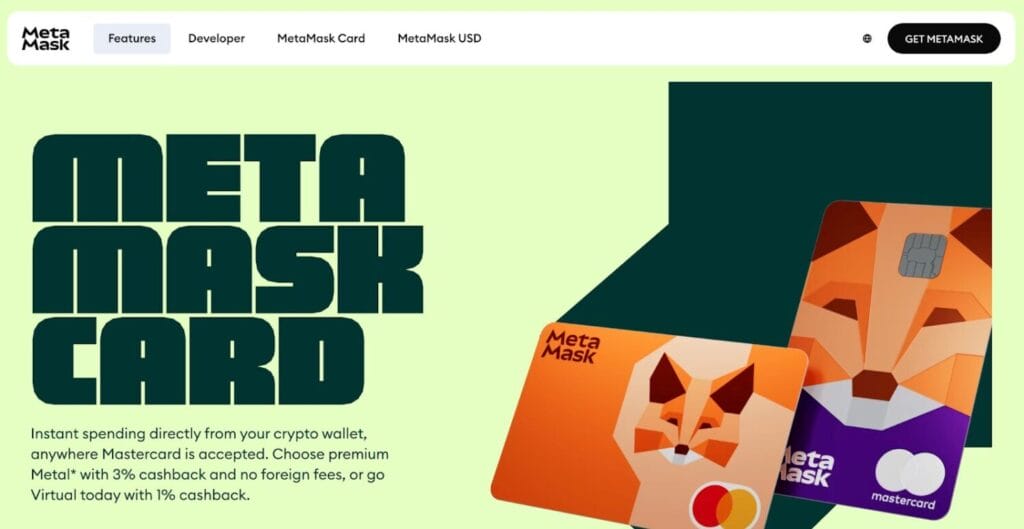
USP – The unique strength of the MetaMask Card is its direct integration with the Ethereum wallet ecosystem.
Users already interacting with DeFi protocols through MetaMask can extend that experience into real world payments without leaving the wallet environment. Spending becomes a natural extension of holding assets on chain rather than a separate financial workflow.
For Ethereum focused users, that seamless integration is powerful.
Key Features
- Self custody spending directly from the MetaMask wallet
- Mastercard global payment network
- Support for ETH, USDC, and USDT
- Up to 3 percent cashback on purchases
- Mobile payment compatibility
- Competitive foreign exchange fees
Pros and Cons
Pros
- Strong integration with the MetaMask wallet ecosystem
- Self custody design aligned with DeFi principles
- Cashback rewards on spending
- Familiar interface for existing MetaMask users
Cons
- Limited supported assets compared to multi chain wallets
- Regional availability still expanding
- Heavy reliance on Ethereum ecosystem
Use Cases
- Ethereum and DeFi focused users
- MetaMask wallet holders
- Individuals who want direct crypto spending without exchanges
- Users prioritizing self custody infrastructure
Conclusion – The MetaMask Card focuses on bringing real world payments into the Ethereum wallet environment. For users already embedded in that ecosystem, it offers a natural extension of their crypto workflow.
SafePal Card
The SafePal Card is built around the SafePal wallet ecosystem, which supports both software and hardware wallets.
Unlike wallets that focus on a single blockchain environment, SafePal emphasizes cross chain compatibility.
The card connects directly with the SafePal wallet, allowing users to spend crypto balances from a wide range of supported blockchains.
This design aims to create a flexible payment tool for users holding assets across multiple networks.
Instead of prioritizing a single ecosystem, SafePal focuses on multi chain access.
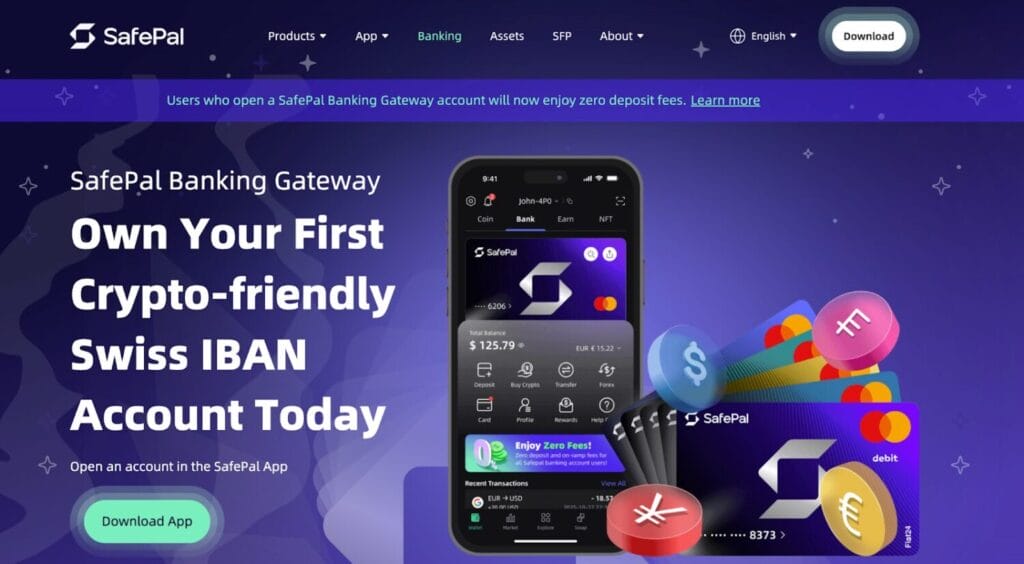
USP – The defining feature of the SafePal Card is its multi chain asset support.
By supporting cryptocurrencies across more than forty blockchains, the card provides significantly broader compatibility than many wallet based payment solutions. This flexibility is particularly valuable for users who hold assets across different ecosystems.
For multi chain investors, SafePal offers a more universal spending interface.
Key Features
- Self custody wallet integration
- Mastercard payment network
- Multi chain asset support across 40+ blockchains
- Mobile wallet compatibility
- Global availability across dozens of countries
- High daily ATM withdrawal limits
Pros and Cons
Pros
- Extensive multi chain asset support
- Global accessibility across many regions
- Strong integration with SafePal wallet infrastructure
- High ATM withdrawal limits
Cons
- No cashback rewards
- Slightly higher complexity due to multi chain architecture
- Less direct integration with specific DeFi ecosystems
Use Cases
- Multi chain crypto investors
- SafePal wallet users
- Individuals holding assets across several blockchains
- Users seeking a globally accessible crypto spending card
Conclusion – The SafePal Card prioritizes flexibility and cross chain compatibility. For users holding assets across multiple blockchain ecosystems, it offers a more versatile spending solution.
Which Card Wins for Which User
Choosing between MetaMask and SafePal ultimately comes down to ecosystem alignment.
For Ethereum native users, the MetaMask Card is the stronger choice. It integrates directly with the MetaMask wallet and provides a streamlined experience for those already operating within the Ethereum DeFi ecosystem.
For multi chain investors, SafePal is the more flexible option. Its ability to support assets across dozens of blockchains makes it better suited for users with diversified crypto portfolios.
For global accessibility, SafePal currently holds an advantage due to its broader regional availability.
For reward focused users, MetaMask has the edge thanks to its cashback structure.
Each card reflects a different vision of wallet driven crypto payments.
Conclusion & Outro by Altie
Wallet infrastructure is evolving fast. What started as simple key management tools are turning into full financial operating systems.
MetaMask represents the Ethereum DeFi stack extending into real world spending. SafePal represents the multi chain wallet model expanding into payments.
Both approaches are important.
MetaMask focuses on tight ecosystem integration. SafePal focuses on cross chain flexibility. Neither approach is strictly better. They serve different types of crypto users.
The real story is bigger than either card. Wallet based payments are slowly removing the need for centralized intermediaries in everyday finance. The more these tools evolve, the closer crypto moves toward a fully self sovereign financial layer.
The cards we see today are early versions of that future.
