


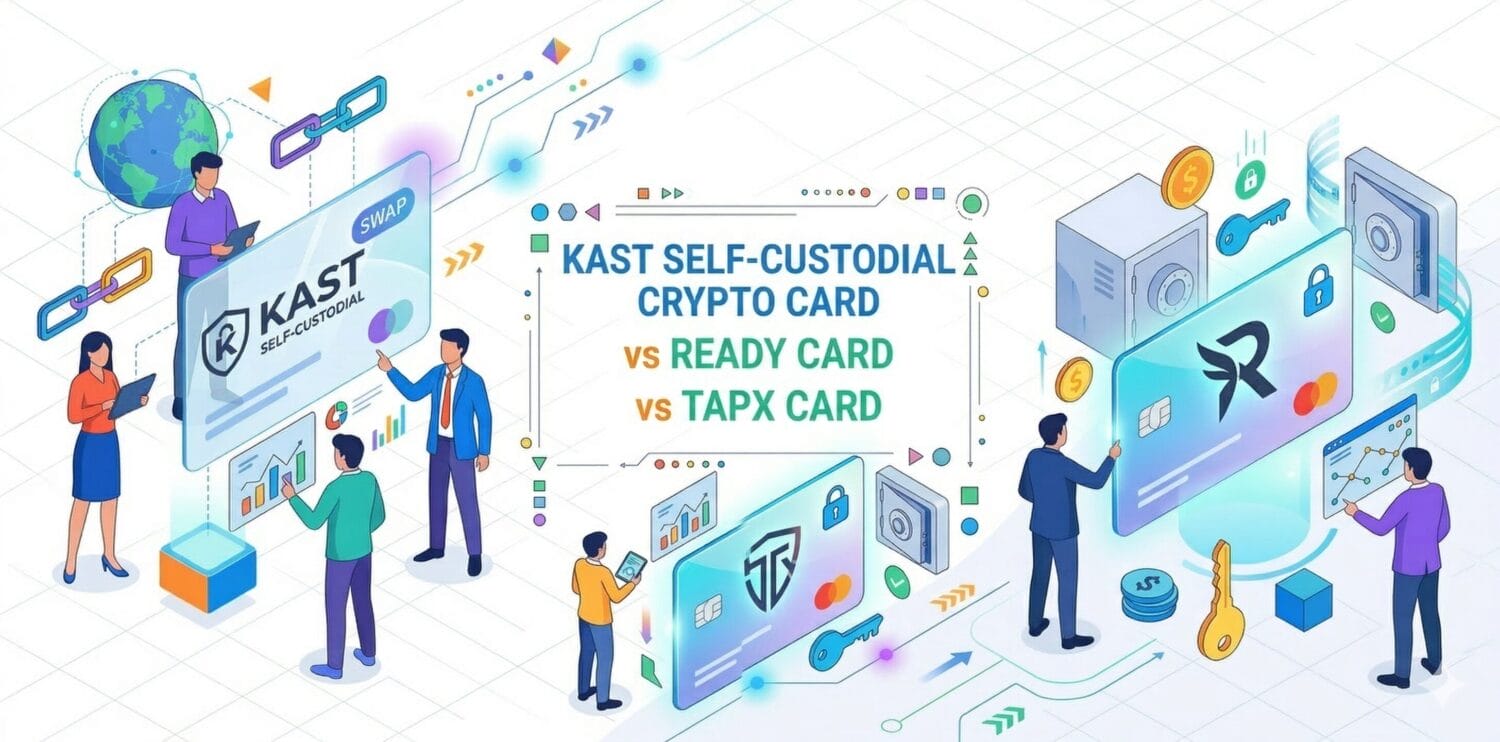
Crypto cards are evolving fast, but the most interesting shift happening right now is the move toward self custodial spending infrastructure. Instead of relying entirely on centralized exchanges, newer cards are trying to connect directly to user controlled wallets.
That shift is important because it changes how crypto interacts with real world payments. Instead of transferring funds to an exchange wallet before spending, users can maintain control over their assets while still accessing traditional payment networks.
Three emerging players exploring this model are Kast, Ready, and TapX. All three provide debit style crypto cards that connect to self custodial wallets while enabling real world spending through Visa or Mastercard.
On the surface, these cards look similar. All of them support global payment networks, mobile wallets, and multiple cryptocurrencies. Under the hood, their reward systems, fee structures, and asset ecosystems are very different.
Let’s break down the Kast Self Custodial Crypto Card vs Ready Card vs TapX Card and see how they compare.

Comparison Table
| Feature | Kast Self-Custodial Crypto Card | Ready Card | TapX Card |
| Type | Debit | Debit | Debit |
| Network | Visa | Mastercard | Visa / Mastercard |
| Custody | Self Custody | Self Custody | Self Custody |
| Cashback | 8% | 0.5% | N/A |
| Annual Fee | Free | Free | Free |
| FX Fee | Not specified | Zero FX fees | 0% FX fees |
| Staking | Yes (earn points boost on staked SOL) | No | No |
| ATM | Varies by region | €200 per month free | Varies by plan |
| Mobile Pay | Yes | Yes | Yes |
| Assets | USDC, SOL, ETH, BTC | Bitcoin, ETH, USDC | Bitcoin, USDT, 70+ cryptocurrencies |
| Metal | No | No | No |
| Bonus | NFT | None | None |
| Regions | Global (160+ countries) | Global | Global |
| Read Review | Click here! | Click here! | Click here! |
What Matters in This Comparison
Comparing crypto cards requires looking beyond simple metrics like cashback percentages. The underlying infrastructure determines how useful the card actually becomes in real world scenarios.
The first key factor is custody architecture. All three cards emphasize self custody, meaning users maintain control of their crypto wallets rather than depositing funds into centralized exchanges. This design aligns with the broader ethos of decentralized finance.
The second factor is reward structure. Kast offers one of the highest cashback percentages among self custodial cards, while Ready provides smaller but simpler rewards. TapX currently focuses more on accessibility than aggressive reward incentives.
The third factor is asset support. TapX supports the largest number of cryptocurrencies, making it attractive for users holding diversified portfolios. Kast focuses on a smaller set of major assets but integrates additional reward mechanics through staking.
Another important consideration is fees and foreign exchange costs. Cards that eliminate FX fees can significantly reduce costs for international transactions.
Finally there is global accessibility. All three cards target global user bases, but availability, ATM limits, and payment integrations can still vary depending on jurisdiction.
These factors together determine which card is the most practical for a given type of crypto user.
Kast Self-Custodial Crypto Card
The Kast Self Custodial Crypto Card is designed to bridge self custody wallets with everyday payments. It allows users to spend cryptocurrencies directly while maintaining control over their assets.
The card operates on the Visa network and supports major cryptocurrencies such as USDC, SOL, ETH, and BTC. Instead of relying purely on spending rewards, Kast also integrates staking mechanics to boost reward points for certain users.
This design positions the card as both a payment tool and a reward ecosystem.
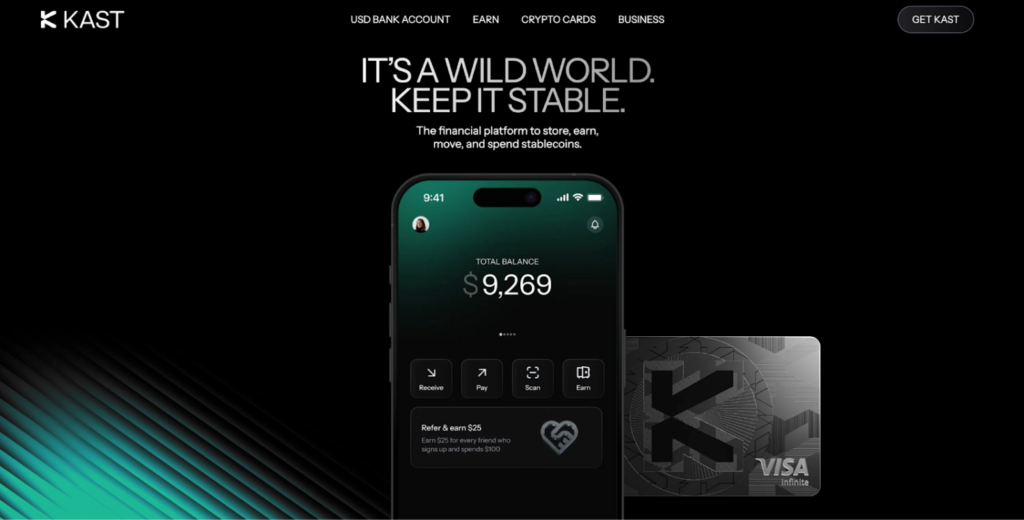
USP – The key differentiator of the Kast card is its reward focused ecosystem built around staking and points boosts.
Users who stake SOL can receive higher reward multipliers, effectively increasing the value of their spending activity. This adds a gamified reward layer that goes beyond standard cashback models.
Combined with relatively high cashback potential, the Kast card aims to attract active crypto users who want stronger incentives.
Key Features
- Up to 8 percent cashback rewards
- Visa global payment network
- Self custody wallet integration
- Support for major cryptocurrencies including BTC, ETH, SOL, and USDC
- Staking based reward boosts
- Mobile wallet compatibility
Pros and Cons
Pros
- High cashback potential
- Integration with staking rewards
- Global availability across many regions
- Self custody asset control
Cons
- Smaller asset list compared to some competitors
- FX fee structure not fully specified
- Reward system may depend on staking participation
Use Cases
- Crypto users seeking strong reward incentives
- Solana ecosystem participants
- Individuals prioritizing self custody payments
- Users who want staking integrated with spending
Conclusion – The Kast card stands out for its aggressive reward structure and staking integration. For users who want to maximize spending rewards while maintaining self custody, it offers a compelling option.
Ready Card
The Ready Card takes a more streamlined approach to crypto payments. Instead of focusing heavily on reward mechanics, it prioritizes simplicity and low fees.
Operating on the Mastercard network, the card supports major cryptocurrencies such as Bitcoin, Ethereum, and USDC. The platform removes foreign exchange fees and provides straightforward spending functionality.
The goal is to create a clean and accessible crypto payment tool.

USP – The defining feature of the Ready Card is its zero FX fee structure combined with a minimalistic reward system.
Rather than relying on complex staking programs or token based reward tiers, the card focuses on keeping transaction costs low. This makes it particularly useful for users making international payments.
The simplicity of the model is its biggest advantage.
Key Features
- Mastercard payment network support
- Zero foreign exchange fees
- Self custody wallet integration
- Support for Bitcoin, Ethereum, and USDC
- Virtual card functionality
- Google Pay compatibility
Pros and Cons
Pros
- No foreign exchange fees
- Simple and accessible user experience
- Strong payment network coverage
- Self custody architecture
Cons
- Low cashback rewards compared to competitors
- Smaller feature set
- Limited asset support relative to multi asset cards
Use Cases
- Users making frequent cross border transactions
- Crypto holders seeking low fee payments
- Individuals prioritizing simplicity over rewards
- New crypto users entering wallet based spending
Conclusion – The Ready Card prioritizes efficiency and simplicity. For users focused on low fees and straightforward spending, it provides a practical crypto payment solution.
TapX Card
The TapX Card focuses on broad cryptocurrency compatibility and global accessibility. Built for users holding diverse crypto portfolios, it supports more than seventy cryptocurrencies.
The card connects to self custody wallets and provides both virtual and physical card options. By supporting both Visa and Mastercard networks, TapX aims to maximize global usability.
Instead of emphasizing cashback rewards, the platform prioritizes flexible access to crypto spending.
USP – The strongest differentiator of the TapX Card is its extensive asset support across more than seventy cryptocurrencies.
This flexibility allows users to spend funds from a wide range of digital assets without needing to consolidate them into a single token or stablecoin. For multi asset portfolios, that compatibility becomes extremely valuable.
The card essentially acts as a universal crypto spending gateway.
Key Features
- Support for 70+ cryptocurrencies
- Visa and Mastercard network compatibility
- Physical and virtual card options
- Self custody wallet integration
- Mobile payment support
- Zero foreign exchange fees
Pros and Cons
Pros
- Extensive cryptocurrency support
- Global accessibility
- Multiple payment network compatibility
- Flexible wallet integration
Cons
- Cashback rewards not yet implemented
- ATM limits vary depending on plan
- Reward incentives weaker than some competitors
Use Cases
- Multi asset crypto investors
- Users holding diverse portfolios
- Individuals seeking global crypto spending tools
- Crypto users prioritizing flexibility over rewards
Conclusion – The TapX Card focuses on accessibility and asset diversity. For users with large or varied crypto portfolios, its broad compatibility makes it an attractive option.
Which Card Wins for Which User
The right choice depends heavily on how users interact with their crypto assets.
For reward focused users, the Kast card clearly stands out with its high cashback potential and staking based reward boosts.
For low fee international spending, the Ready Card becomes a strong candidate due to its zero foreign exchange fees.
For multi asset investors, the TapX Card offers the greatest flexibility thanks to its support for more than seventy cryptocurrencies.
Each card prioritizes a different aspect of the crypto spending experience.
Conclusion
Crypto cards are slowly transforming from simple debit tools into a new layer of financial infrastructure.
Kast focuses on rewards and staking incentives. Ready focuses on simplicity and low transaction costs. TapX focuses on flexibility and asset diversity.
These approaches represent different visions of how crypto should integrate with traditional payment networks.
The broader trend is clear. Self custody wallets are no longer just storage tools. They are becoming full financial gateways where users can hold assets, earn yield, and spend funds without relying entirely on centralized platforms.
The cards we are seeing today are early versions of that infrastructure. Over time, the line between crypto wallets and payment systems will likely disappear.
